
John Loughlin
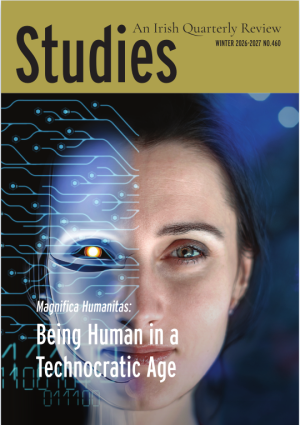
Western societies confront a striking paradox. Human beings possess powers of scientific and technological intervention that would have seemed unimaginable to earlier generations, yet they appear increasingly uncertain about what it means to be human and about the purposes for which those powers should be used. Artificial intelligence, biotechnology, and the concentration of technological power have therefore intensified a question that is more ancient than any modern invention: what is the human person? Pope Leo XIV places this anthropological question at the centre of Magnifica Humanitas. The encyclical’s concern is not simply that new technologies may be used badly. It is that every economic, political, or technological order embodies, whether explicitly or implicitly, a particular moral vision of the human being. Technologies are not developed in an anthropological vacuum. They reflect assumptions about freedom, embodiment, vulnerability, reason, relationship, and the ends of human life. The contemporary instability of the language of human dignity demonstrates the urgency of Leo’s question. Dignity is invoked across the political and moral spectrum, but often in support of incompatible conclusions. It is appealed to both in defence of unborn or dependent life and in arguments for abortion, assisted suicide, and euthanasia; both to affirm the givenness of the human body and to defend individual self-definition. The difficulty is therefore not that dignity has ceased to matter, but that the term no longer possesses an agreed anthropological content. This ambiguity was already latent in the post-war settlement. The Universal Declaration of Human Rights affirmed the inherent dignity and equal rights of every member of the human family but deliberately avoided prescribing a single philosophical or religious account of their foundation. As Jacques Maritain famously observed, representatives of very different traditions could agree upon a practical catalogue of rights while disagreeing about the reasons for affirming them.1 Christopher McCrudden has consequently described dignity as a ‘placeholder’: indispensable to modern human-rights discourse, yet open to competing substantive interpretations.2
During the period of Western history known as Christendom, men and women broadly shared a common moral vision, to use Pope Leo’s term. Human beings were understood as created by God, wounded by sin, redeemed by Christ and destined for eternal life. Human dignity was therefore grounded not in ability, power, or self-determination but in humanity’s participation in a transcendent order.3 The gradual fragmentation of this vision during the Reformation, Enlightenment, and modern period led to the emergence of rival anthropologies. Human beings came to be understood increasingly in terms of rational autonomy, biological reductionism, economic production, or subjective self-creation. While these approaches often preserved important insights, they no longer rested upon a shared understanding of what the human person is. The cultural changes of the later twentieth century intensified these developments. Increasingly, disagreements were no longer confined to particular political or social questions but concerned the meaning of freedom, embodiment, sexuality, marriage, life, and death. As Chantal Delsol argues, the language of human dignity has survived the decline of Christendom, but the moral vision that once gave it a broadly shared meaning has not.4 It is in this context that Magnifica Humanitas seeks to recover a richer Christian anthropology capable of guiding contemporary scientific and technological power.
Magnifica Humanitas may be read as an attempt to recover the richer Christian anthropology without which the language of dignity becomes unstable. I shall argue that this anthropology is structured by three interconnected dialectics: image and likeness, glory and misery, and the creative encounter between biblical revelation and classical reason. These tensions do not weaken the Christian account of dignity. They explain both its universality and its realism: dignity is given to every human being yet also constitutes a vocation; the human person possesses extraordinary grandeur yet remains wounded by sin; and faith’s account of the person is illuminated, though never replaced, by philosophical reason. These dialectics also provide a framework for identifying and evaluating some of the rival moral visions of late modernity, particularly those expressed in transhumanism, posthumanism, and contemporary technological culture.
Image and likeness: gift and vocation
1. Babel and Nehemiah as rival forms of human endeavour
In Magnifica Humanitas, Pope Leo contrasts the Tower of Babel with Nehemiah’s rebuilding of the walls of Jerusalem after the Jews return from exile.5 For Leo, Babel represents human ingenuity, but ingenuity governed by pride, self-sufficiency, uniformity, and the pursuit of power. Most important is the fact that God is excluded from the human project and humanity attempts to construct the Tower by its own efforts. The result is failure, chaos, and division, symbolised by the fragmentation of language itself. The rebuilding of the walls of Jerusalem, on the other hand, illustrates prayerful, patient, and cooperative action directed towards restoration and the common good. Nehemiah combines prayer with planning, organisation, and sustained work, while the rebuilding itself becomes an exercise in shared responsibility. Leo is not arguing that human endeavour, science, and technology are bad in themselves, but rather that attention must be paid to the moral vision behind them. In the first case, human action is governed by self-sufficiency, pride, and the exclusion of God. In the second, human agency remains open to God and is exercised through cooperation, humility, and a concern for the common good. This distinction is essential for understanding the Church’s attitude towards science and technology. The contrast between Babel and Nehemiah therefore raises a prior question: what does it mean to be human, and towards what end should human powers be directed?
2. Genesis as the biblical breakthrough
The Christian understanding of human dignity is founded in the theological anthropology of Genesis 1:26–27, which declares that human beings are made in the image and likeness of God.6 To grasp the significance of this claim, it must be set against the backdrop of the creation narratives of the Ancient Near East. Genesis radically transforms this worldview. The image of God is no longer restricted to rulers but attributed to all human beings, male and female alike. The second creation account deepens this vision. Human beings are created not merely to serve divine purposes but for relationship with God, with one another, and with the created world. At the same time, Genesis 3 introduces sin and the possibility that humanity may misuse its God-given vocation. Thus, biblical anthropology presents human beings as creatures of the one God, born into a world that is itself good, made for friendship with God and each other, and called to participate responsibly in creation. The biblical text itself does not clearly distinguish between image and likeness, but this distinction became highly significant in the early Christian tradition.
3. Image and likeness: gift and vocation
In the original Hebrew text of Genesis, ‘image’ and ‘likeness’ are generally regarded by biblical scholars as near synonyms, reflecting a characteristic feature of Hebrew style in which the same idea is expressed through two related terms. In Greek, however, the language of the Septuagint, some of the early Christian Fathers detected a distinction between the two. One of the earliest was St Irenaeus of Lyons (c. 130–202), who distinguished between the ‘image’, which remained even after the Fall as part of the intrinsic dignity of the human being, and the ‘likeness’, which was lost, or at least severely damaged. The Christian vocation consisted in recovering this likeness through grace. The author of Colossians describes Jesus Christ as the ‘image of the invisible God’ (Col 1:15), and the likeness is therefore restored through conformity to Christ. The significance of Irenaeus’s distinction is that it allows Christian anthropology to hold together two truths that are often separated in modern thought. On the one hand, human dignity is an inalienable gift grounded in the image of God and therefore possessed equally by every human being. On the other hand, the human person is called towards a fulfilment that is not yet complete. Human life is therefore not simply a possession but also a vocation. We receive our dignity before we achieve anything, yet we are called to grow into the likeness of God through grace and moral transformation.7 Pope Leo XIV develops this insight through his distinction between ontological, moral, social, and existential dignity. Ontological dignity belongs to every human being simply by virtue of being human and therefore cannot be lost. Moral dignity concerns the exercise of freedom and virtue; social dignity may be wounded by injustice, exclusion, or exploitation; and existential dignity may be obscured by suffering, poverty, or marginalisation. Yet none of these diminish the fundamental dignity that belongs to every person as one created in the image of God.8 The distinction between image and likeness therefore enables Christian anthropology to affirm both equality and vocation. Every human being already possesses an inviolable dignity that does not depend upon intelligence, productivity, social status, physical capacity, or moral achievement.
At the same time, human beings are called beyond their present condition towards conformity with Christ, who reveals the fullness of what it means to be human. Dignity is thus both gift and task: something received before it is achieved. Against every attempt to reduce human worth to utility, performance, or power, Magnifica Humanitas insists that the value of the person precedes achievement and cannot be measured by capacity alone.9 The relevance of this distinction can be seen in current debates about expressive individualism, self-creation, and transhumanism. Although the Catholic Church does not deny human freedom and uniqueness, the importance of creativity, or the value of overcoming illness and disability, it rejects the idea that human beings can achieve fulfilment solely through their own efforts, without reference to God or to the transcendent dimension of human existence. This is the temptation symbolised by the Tower of Babel, where humanity seeks self-sufficiency and mastery through its own power. By contrast, the rebuilding of Jerusalem under Nehemiah represents a form of human creativity that remains open to God, conscious of human limits, and directed towards the common good.10 The same contrast reappears in Leo XIV’s critique of transhumanist and posthumanist visions of technological self-transcendence. Against projects that seek to perfect or surpass humanity through technology alone, he argues that the authentic ‘more than human’ is found not in technological enhancement but in transformation by grace through conformity to Christ.11
II Gloria et miseria: The paradox of the human condition
Biblical revelation presents two key dimensions of the human condition. First, the extraordinary idea that we are somehow made in the image of God and are called to be like him. Second, that there was some original moral catastrophe that made humans choose a path different from the one that God had mapped out for us. I call these two aspects of the human condition gloria (glory) and miseria (wretchedness).
1. Gloria
The original plan for humanity is symbolised by the Garden of Eden, where Adam and Eve lived in friendship with God and in harmony with one another and the created world. This vision of human flourishing is reflected in Psalm 8, which marvels that humanity has been made ‘little less than a god’ and entrusted with responsibility for creation. Human beings are therefore not merely another object within nature but occupy a unique place within it, called to exercise freedom and stewardship in communion with God. The Christian tradition developed this insight by emphasising humanity’s capacity for truth, beauty, and goodness. Pope Leo XIV repeatedly affirms this vision of human grandeur. The encyclical opens by describing humanity as ‘created by God in all its grandeur’ and called to grow towards fullness in Christ.12 He insists that technology itself is a profoundly human reality linked to freedom, creativity, and responsible action.13 Human greatness is seen not only in technical achievement but also in the capacities of conscience, freedom, creativity, self-giving love, and the building of culture and civilisation. Leo points to artistic masterpieces such as Beethoven’s Ninth Symphony and Picasso’s Guernica, as well as institutions devoted to human rights, humanitarian service, and peacebuilding, as signs of humanity’s remarkable capacity to pursue truth, justice, and beauty.14 For Leo, the highest expression of this greatness is not technological mastery but the human capacity for relationship and love. Human beings can reflect, choose, sacrifice themselves for others and enter into communion with God and neighbour. These capacities reveal what he calls the ‘grandeur of humanity’, a grandeur that no machine can replicate because it is rooted in personhood itself.15
2. Human misery
All of this constitutes a rich Christian humanism, but the Christian understanding of human life does not stop there. The Bible and human history also tell a story of the Fall, sin, violence, domination, and alienation. Through the sin of disobedience, itself an expression of pride, Adam and Eve are expelled from the Garden and, while retaining the promise of glory, become subject to suffering, toil, and death. God never abandoned humanity, but entered into its condition through the Incarnation. In Jesus Christ, the innocent Son of God freely shared the burdens of human existence, including suffering, rejection, and death. Indeed, human history can often appear as a long record of misery and hardship marked by violence and injustice. Alongside the achievements of civilisation and the great accomplishments of Christian humanism, there have existed poverty, oppression, war, exploitation, and cruelty. Pope Leo XIV repeatedly draws attention to this darker side of the human condition. He warns against forms of dehumanisation that reduce persons to instruments of efficiency, productivity, or technological control.16 He points to poverty, exclusion, forced migration, and contemporary forms of slavery as evidence that human dignity continues to be violated on a large scale.17 He also devotes significant attention to war, violence, and the pursuit of domination, arguing that technological progress has not removed humanity’s capacity for destruction but may even amplify it when detached from moral responsibility.18 Most strikingly, Leo invokes Viktor Frankl’s reflection on Auschwitz to illustrate the paradox of human nature: the same humanity that built the gas chambers was also capable of entering them with courage, faith, and dignity.19 The Christian doctrine of gloria et miseria therefore insists that any adequate account of human dignity must acknowledge both dimensions of the human condition. Human beings are capable of truth, beauty, creativity, and love, yet they are equally capable of selfishness, violence, and oppression. The greatness of humanity can only be understood alongside its woundedness. It is precisely this tension that Christian anthropology seeks to explain and that Magnifica Humanitas retrieves in its response to the challenges of the contemporary world.
3. Pascal and Christian realism
Blaise Pascal perhaps articulated this paradox more clearly than any other Christian thinker. Against both excessive optimism and excessive pessimism, Pascal insisted that the human being is simultaneously great and wretched. Humanity possesses a unique dignity because it is capable of self-consciousness, truth, and the knowledge of God. Yet this very capacity reveals its own misery. As Pascal famously observed, ‘man’s greatness comes from knowing he is wretched.’20 Human beings are greater than the universe that crushes them because they are aware of their condition, yet they remain wounded, finite, and divided against themselves. Pascal’s insight helps explain why Christianity resists both the modern tendency to regard humanity as indefinitely perfectible and the contrary temptation to reduce human beings to biological, economic, or technological processes. Human beings are neither gods nor beasts. They are creatures marked by both glory and misery. Christian anthropology therefore remains neither naively optimistic nor pessimistic but profoundly realistic about the human condition. It is precisely this Pascalian realism that underlies Magnifica Humanitas, which rejects both the utopian belief that technology can perfect humanity and the cynical view that human beings are nothing more than products of power, biology, or instinct.
4. Gloria et miseria in Magnifica Humanitas
The dialectic of gloria et miseria is woven throughout Magnifica Humanitas. Leo XIV celebrates humanity’s extraordinary capacities for creativity, scientific discovery, and technological innovation, yet repeatedly warns that these same capacities can be turned towards domination, exclusion, and destruction when detached from moral responsibility. The ecological crisis, the persistence of poverty, the exploitation of vulnerable populations, and the continuing reality of war all demonstrate that technological progress alone cannot resolve the deepest problems of human existence.21 Humanity’s powers have expanded dramatically, but the moral condition of humanity remains fundamentally unchanged. For Leo, genuine progress therefore requires not only technological innovation but moral and spiritual renewal. Human dignity remains credible only when it acknowledges both human greatness and human brokenness.
III Jerusalem and Athens: revelation and reason
The Catholic understanding of human dignity emerged from the encounter between biblical revelation and the philosophical culture of the Greco-Roman world. Biblical faith contributed the conviction that every human being is created in the image and likeness of God and called into relationship with the Creator. Classical philosophy contributed concepts of reason, nature, virtue, and the common good. Together they formed a Christian anthropology that was richer than either source in isolation. One of the most significant consequences of this synthesis was the transformation of ancient understandings of human dignity. In the classical world, dignity was often associated with rank, citizenship, education, or social status. Society itself was understood as hierarchical and slavery was generally regarded as a natural institution. Christianity introduced a radically different principle: all human beings possess an equal dignity because they are created by God and called to become his children. This conviction gradually reshaped moral, social, and political thought throughout late antiquity and the Middle Ages.
The encounter between Christianity and classical culture also provides an important model for contemporary engagement with secular society. Early Christian thinkers neither rejected Greek philosophy nor accepted it uncritically. Biblical anthropology, with its understanding of the human person as an embodied unity of body, soul, and spirit, differed significantly from the dualism that characterised much Platonic thought. Yet the Fathers recognised genuine insights within classical philosophy and adapted them to a Christian framework. Clement of Alexandria and Origen in the Greek- speaking East, together with Tertullian and Augustine in the Latin West, employed concepts drawn from Platonism and Neoplatonism in order to articulate Christian doctrines of creation, salvation, and the human person. The result was a creative synthesis in which biblical faith and philosophical reason mutually enriched one another. Revelation supplied truths that reason alone could not discover, such as creation in the image of God, the Incarnation, and humanity’s supernatural destiny. Philosophy supplied conceptual tools for reflecting on nature, reason, virtue, and the common good.
The Christian doctrine of human dignity is therefore neither purely biblical nor purely philosophical. It emerged from the fruitful dialogue between Jerusalem and Athens and became one of the defining achievements of Christian civilisation. Although Leo XIV never explicitly invokes the traditional language of ‘Jerusalem and Athens’, Magnifica Humanitas presupposes precisely such a synthesis. He repeatedly describes Christian social doctrine as emerging from a fruitful dialogue between the Gospel and human knowledge and insists upon the importance of philosophy, the human sciences, and historical experience in illuminating revealed truth.22 The encyclical therefore stands within the long tradition that sought to unite biblical revelation with rational inquiry. In this respect, Leo is not proposing a rejection of modern knowledge but a recovery of the creative relationship between faith and reason through which the Christian doctrine of human dignity first emerged. The anthropological crisis of the present age is therefore also a crisis in the relationship between faith and reason.
IV. Human dignity and contemporary challenges
The recovery of a Christian understanding of human dignity does not require the uncritical acceptance of all modern intellectual developments. Throughout its history, Christianity has entered into dialogue with other worldviews while also critically assessing ideas that appeared incompatible with the Gospel and the Christian understanding of the human person. One of the earliest examples was Gnosticism, which tended to regard material reality as inferior to spiritual reality and therefore stood in sharp contrast to the Christian affirmation of creation, embodiment, and the Incarnation. The Church’s confrontation with such ideas helped to clarify and deepen its understanding of the human person. Without drawing simplistic historical parallels, some of the challenges identified by Magnifica Humanitas raise similar anthropological questions. In each case, the issue is not merely technological or political but concerns the nature of the human person and the source of human dignity.
1. Artificial Intelligence
Pope Leo XIV does not condemn artificial intelligence in a Luddite manner. On the contrary, he repeatedly acknowledges the positive possibilities of technological innovation and recognises AI as a valuable tool when employed responsibly.23 Rather, he raises questions about the moral vision that guides its development and the assumptions concerning the human person embedded within it. AI is never neutral because it reflects the priorities and values of those who design and use it.24 Leo is particularly concerned with attempts to identify machine intelligence with human intelligence. Artificial intelligence can process information at extraordinary speed and simulate many human capacities, but it lacks embodiment, moral responsibility, consciousness, and authentic relationships. It can imitate understanding without truly understanding. Human beings remain moral and spiritual subjects rather than merely information-processing systems.25 The challenge therefore lies not in the existence of AI itself but in the temptation to adopt a reductionist view of humanity in which persons are regarded as sophisticated biological machines.
2. Biotechnology and transhumanism
These concerns become more pronounced in contemporary transhumanist thought. While transhumanism encompasses a range of positions, its central aspiration is the technological enhancement of human beings and, in some formulations, the transcendence of current biological limitations altogether. Leo identifies this as one of the major anthropological narratives underlying the digital age.26 Against this vision, Leo argues that the authentic ‘more than human’ is found not in technological enhancement but in grace and conformity to Christ.27 Human flourishing is achieved not by escaping the human condition but by bringing it to fulfilment in communion with God.
3. Cultural fragmentation and the crisis of anthropology
Underlying these debates is a more fundamental crisis concerning the meaning of the human person. The fragmentation of the Christian humanist synthesis has produced competing understandings of freedom, identity, and human flourishing. As thinkers such as Alasdair MacIntyre and Charles Taylor have argued, modern societies increasingly employ moral concepts inherited from Christianity while lacking agreement about the anthropological foundations that originally supported them.28 One influential modern understanding identifies human dignity primarily with autonomy and self-determination. Human beings are regarded as free to define their own identity and pursue their own conception of fulfilment provided they do not interfere with the freedom of others. Other approaches move in the opposite direction and question the very idea of human dignity itself, reducing human beings to biological organisms or viewing them largely through the categories of evolutionary or ecological theory. Leo describes some of these tendencies as forms of posthumanism because they challenge the uniqueness of the human person and blur the distinction between human beings, machines, and other forms of life.29
He is also concerned by anthropological theories that separate personal identity from embodiment and thereby weaken the unity of the human person revealed in creation and affirmed by the Incarnation.30 Whether expressed through artificial intelligence, transhumanism, radical individualism, or posthumanism, the deepest challenges identified by Magnifica Humanitas are ultimately anthropological. They arise from rival answers to the question what is a human being? Leo XIV’s response is grounded in the three dialectics explored in this article. Human beings possess an inalienable dignity because they are created in the image of God; they are marked by both glory and misery; and their dignity can only be fully understood through the creative encounter between biblical revelation and rational reflection. The crisis of the technological age is therefore not simply a crisis of technology but a crisis of anthropology.
Conclusion
Human dignity cannot be understood through a single principle or reduced to a single dimension of human existence. The distinction between image and likeness affirms both the inalienable dignity of every human being and the vocation to grow into conformity with Christ. The dialectic of gloria et miseria explains both humanity’s astonishing achievements and its capacity for violence, domination, and self-destruction. The encounter between Jerusalem and Athens demonstrates that Christian anthropology emerged from a creative dialogue between revelation and reason. Read in this light, Magnifica Humanitas is not primarily a document about technology. Rather, it is an attempt to recover a richer understanding of the human person at a moment when the meaning of humanity is increasingly contested. Artificial intelligence, biotechnology, transhumanism, and posthumanism all raise important practical questions, but beneath them lies a deeper issue: what is a human being? Leo XIV argues that no adequate answer can be given apart from a recognition of humanity’s origin in God, its vocation to communion, its woundedness through sin, and its openness to grace. The deepest crises raised by artificial intelligence, biotechnology, and contemporary culture are therefore not primarily technological. They are anthropological. They concern what human beings are and what they are for. Magnifica Humanitas is significant because it returns this question to the centre of contemporary debate.
Professor John Loughlin is Senior Research Fellow at Blackfriars Hall, Oxford, and a member of the Las Casas Institute. He is Emeritus Fellow of St Edmund’s College, Cambridge, as well as Emeritus Professor of European Politics at Cardiff University, where he held the Chair of European Politics from 1994 to 2010.
Notes
- Jacques Maritain, ‘Introduction’, in Human Rights: Comments and Interpretations: A Symposium Edited by UNESCO (Allan Wingate, 1949), p. 10. Maritain recalls the UNESCO discussions with the observation ‘we agree about the rights on condition that no one asks us why.’
- Christopher McCrudden, ‘Human Dignity and Judicial Interpretation of Human Rights’, European Journal of International Law, 19:4 (2008), pp. 655–724.
- See J. Loughlin, Human Dignity: Its Roots and Challenges in Western Thought (T&T Clark, 2026).
- Chantal Delsol, La Fin de la Chrétienté (Éditions du Cerf, 2021).
- Pope Leo XIV, Magnifica Humanitas (The Holy See, 2026), 7–10, 16, 90.
- Pope Leo XIV, Magnifica Humanitas, 50.
- Pope Leo XIV, Magnifica Humanitas, 50–53
- Pope Leo XIV, Magnifica Humanitas, 52.
- Pope Leo XIV, Magnifica Humanitas, 50–53.
- Pope Leo XIV, Magnifica Humanitas, 7–10, 90.
- Pope Leo XIV, Magnifica Humanitas, 115–129.
- Pope Leo XIV, Magnifica Humanitas, 1.
- Pope Leo XIV, Magnifica Humanitas, 4.
- Pope Leo XIV, Magnifica Humanitas, 122–125.
- Pope Leo XIV, Magnifica Humanitas, 15, 233.
- Pope Leo XIV, Magnifica Humanitas, 15, 51–53, 92–95.
- Pope Leo XIV, Magnifica Humanitas, 77–81, 173–179.
- Pope Leo XIV, Magnifica Humanitas, 182–208.
- Pope Leo XIV, Magnifica Humanitas, 121.
- Blaise Pascal, Pensées, trans. by A. J. Krailsheimer (Penguin, 1995), fragment 114 (Lafuma numbering).
- Pope Leo XIV, Magnifica Humanitas, 92–95, 101–110, 182–208.
- Pope Leo XIV, Magnifica Humanitas, 22–24.
- Pope Leo XIV, Magnifica Humanitas, 97–100.
- Pope Leo XIV, Magnifica Humanitas, 104–110.
- Pope Leo XIV, Magnifica Humanitas, 99, 233.
- Pope Leo XIV, Magnifica Humanitas, 115–117.
- Pope Leo XIV, Magnifica Humanitas, 127–128.
- Alasdair MacIntyre, After Virtue: A Study in Moral Theory, 3rd edn (University of Notre Dame Press, 2007); Charles Taylor, Sources of the Self: The Making of the Modern Identity (Harvard University Press, 1989), and A Secular Age (Harvard University Press, 2007).
- Pope Leo XIV, Magnifica Humanitas, 115–117.
- Pope Leo XIV, Magnifica Humanitas, 50, 112–120.