
Martin Hawkes
At certain moments in a nation’s life, questions long deferred return with renewed urgency. Ireland now finds itself at such a moment in relation to education. The establishment of the Convention on Education signals not merely another policy initiative but the possibility of a deeper national conversation – one that asks not only how we educate but why.
This is not an abstract question. It goes to the heart of what kind of society Ireland wishes to become and what kind of human capacities it seeks to cultivate in its citizens. In a time of accelerating change – ecological, technological, social – the adequacy of inherited assumptions can no longer be taken for granted. The advent of AI (artificial intelligence) asks profound questions not just about the nature of education and work but about how we create meaning.
This article traces the genesis of the Convention from its origins in a 2018 symposium at the Burren College of Art, through its maturing during the intervening years, to its present unfolding. It also explores the hopes invested in it: that it might help Ireland articulate a renewed purpose for education and develop processes capable of sustaining meaningful change in a time of profound uncertainty.
Origins: A symposium, a process, and a missing voice
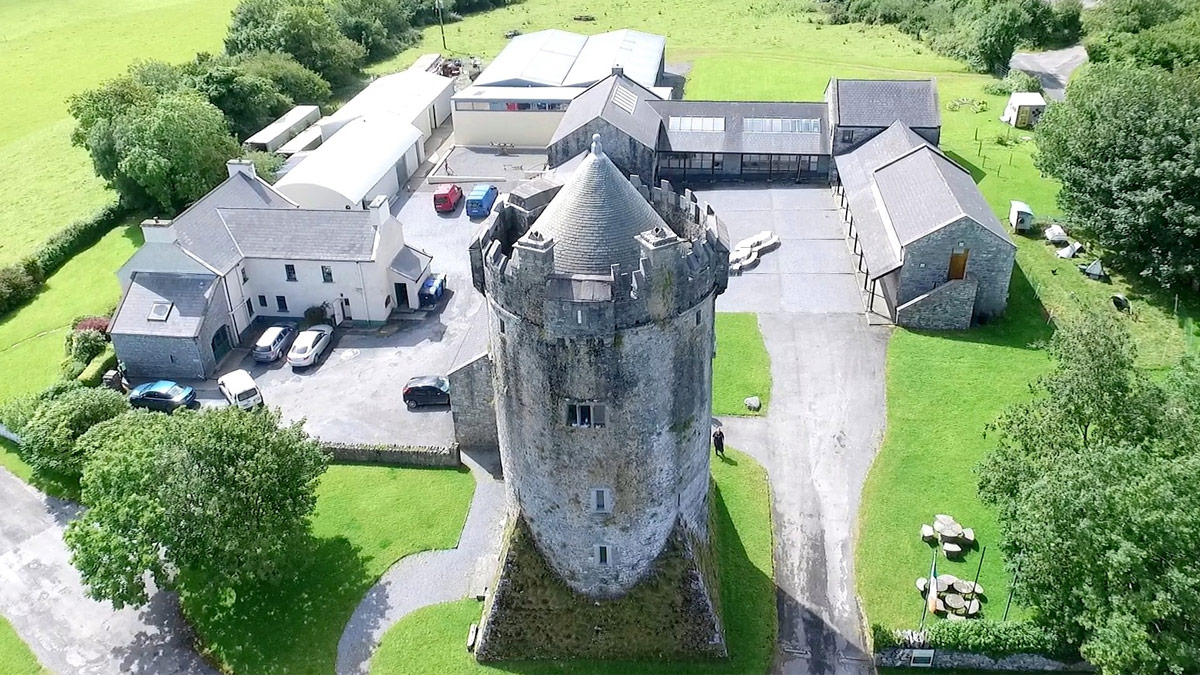
The origins of the Convention lie in a three-day symposium held in 2018 at the Burren College of Art entitled ‘Towards a More Creative Education System’.1 What distinguished this gathering was not only its theme but its underlying philosophy: that meaningful reform in education must begin by convening the system as a whole. The answers we seek reside within the wisdom of the collective system and so the participants in the symposium were themselves the experts – there were no ‘sages on the stage’. Creative practice, being in nature, letting go of representational labels, and artful facilitation were central to allowing participants bring their lived experience and best intelligence to the process at hand.
Participants were drawn from across the educational landscape – students, teachers, school leaders, policy-makers, academics, artists, and community practitioners. Martin Hayes’ fiddle playing helped transform the space into a zone of inspiration. The diversity of participants was not incidental; it reflected a recognition that education is not a single system but a societal ecosystem, shaped by multiple actors, values, and lived realities.
Central to the design of the symposium was the intentional inclusion of young people. Historically, they have been the objects rather than the subjects of educational discourse – those upon whom policy acts, rather than those who help shape it. Yet when invited into genuine dialogue, their contributions proved not only insightful but often disarmingly direct. They spoke to experiences of pressure, disengagement, creativity, aspiration, and contradiction in ways that cut through abstraction.
This inclusion marked more than a methodological choice; it signalled a shift in ethos. If education is to serve young people, their voices must be constitutive of its development.
What emerged from the 2018 symposium was not a blueprint for reform but a deeper insight: that in a system as complex and values-based as education, no single perspective can grasp the whole. The knowledge required for meaningful change is inherently distributed. It resides in classrooms, staff rooms, homes, and communities as much as in policy documents.
The implication is profound. Reform cannot be conceived solely as a technical exercise of design and implementation. It must also be understood as a process of collective sense-making – one that creates the conditions for the system to listen to itself.
In the years following 2018, the Burren College of Art, through its ReSource centre, committed itself to nurturing this process. Regular symposia and colloquia were convened in the Burren and in Dublin, each exploring different dimensions of the educational landscape that needed to be considered by a national conversation on education. Central issues and insights included:
- the foundational importance of addressing the purpose of education as the key enabler that would allow all the other questions that arise in education to be more readily answered;
- recognition that enabling change in the lived reality of education requires democratic participatory processes by which reform
- agendas are sourced, implemented, and refreshed in an ongoing creatively-facilitated learning cycle – reform, to be effective, cannot be handed down on tablets of stone;
- inclusion as a core value;
- how best to enable the voices of children and young people to be heard and taken fully into account;
- the need not just to include but to assess social and emotional skills as an integral part of what education needs to be;
- the importance of enabling children and young people to discover answers to the basic questions that give meaning and purpose to life – Who am I? Why am I here? What’s our role in the greater scheme of things?
- Students in initial teacher education wanted greater teacher autonomy, greater respect for the teaching profession and improvement in the teaching of Irish.
This body of work did not seek to replace formal policy-making processes. Rather, it sought to inform them – to bring into view forms of tacit knowledge that are often overlooked because they are difficult to quantify or codify.
It is also important to recognise how the context evolved during this period between the 2018 symposium and the convening of the Convention in 2026. The COVID-19 pandemic forced an unprecedented disruption of schooling, revealing both the fragility and adaptability of the system. Brexit altered Ireland’s economic and political environment. The pervasive influence of social media on young people’s lives became more pronounced, with implications for attention, identity, and mental health. Most recently, the emergence of artificial intelligence has begun to challenge fundamental assumptions about knowledge, assessment, the role of the teacher, and the wider world for which education is preparing young people.
These developments have not created the need for reform, but they have intensified it. Questions that might once have been considered long-term have become immediate. The long-term vision of the Department of Education and Youth (DEY) to 2050, while useful in providing space for visioning, collides with a felt sense of the need for rolling action, beginning now.
From the creative ferment of the 2018 symposium emerged a powerful recognition of the need for a citizens’ assembly on the future of education. Getting commitment to its inclusion in a programme for government was the product of intense lobbying of political parties and door-stepping politicians whenever the opportunity arose. Supporters of the cause, meeting in the inspiring haven that is Larkin College in Dublin’s north-east inner city, briefed themselves on how citizens’ assemblies work and planned political strategy.
The inclusion of a commitment to a citizens’ assembly, first in the manifestos of political parties and then in a programme for government, marked a significant moment: the recognition that education warranted the same level of deliberative attention as other major societal issues. Securing this recognition was all the more impressive in a context where the education system was perceived to be performing well by conventional metrics. Overcoming the default ‘if it isn’t broken why fix it’ was an important acknowledgment in itself.
Yet the initial commitment was not fulfilled. Citizens’ assemblies, long a feather in the cap of Ireland’s leadership in participatory democracy, fell out of favour. A degree of caution entered the political system following the failure of a constitutional referendum in March 2024 on the role of the women/mothers in the home. Citizens’ assemblies, while widely respected, were no longer seen as risk-free instruments of policy development. The promised citizens’ assembly on the future of education was allowed to slip from the government’s agenda as an election was called in November 2024. At the same time, the underlying impulse – to convene a national conversation on education – remained alive. Through continued engagement with the political system, it evolved into a different form in the programme of the government that took office in January 2025.
From assembly to convention: risks and opportunities
The eventual commitment was to a convention on education2 under the aegis of the Department of Education and Youth, echoing the first landmark consultative national convention on education convened by the then minister for education Niamh Breathnach in 1993. This shift to an earlier form carries both risks and possibilities.
It is important to acknowledge what may have been lost in this transition from a commitment to a citizens’ assembly to a convention on education. Citizens’ assemblies, regarded by some as the crown-jewels of participatory democracy, were placed under the aegis of the taoiseach’s department so as to insulate them from undue departmental influence. They thus constituted a more neutral and independent deliberative space.
The risk is that the Department of Education and Youth may limit the Convention’s scope, consciously or unconsciously aligning it with existing policy frameworks. The very structures that enable implementation can also constrain imagination. In addition, it’s not clear if the report of the Convention will follow citizens’ assembly precedent in being considered by an Oireachtas Committee and reported on by them to the government, thus creating political engagement with its output. It would be all too easy for the report to be swallowed up in a 2050 visioning process in the department without commitment to any real cultural or systemic change.
Yet there are also significant opportunities. This convention is, in its own way, as innovative as its 1993 predecessor was for its time. The Convention’s scale – 150 members – allows for broader representation than the 99 participants in a typical citizens’ assembly. More importantly, it includes 30 children and young people as full participants. This is not merely symbolic. It is a pioneering example of participatory democracy. If properly supported and facilitated, the presence of children and young people has the potential to alter the dynamics of deliberation in substantive ways.
The process is already underway with a remit that is focused on primary and secondary education. Its stated ambition is to be a ‘once in a generation’ opportunity for children, young people, parents, educators, and wider society to help shape Ireland’s education for decades to come. It will inform the department’s long-term strategy for education: Our Schools, Our Future.
A national conversation phase,3 including a national survey (with over 40,000 responses) along with school and regional engagements, has sought to gather inputs from across the country. The scope of the enquiry has been limited, particularly by not inviting adequate consideration of existential crises facing the world. It has, however, identified ways in which the current system is challenged to meet present needs and allowed these to emerge as priorities. An introductory weekend meeting of the Convention was held in Athlone on 21–22 March 2026,4 prior to the formalisation of terms of reference by the government. Further sessions are scheduled for 9–10 May, 26–27 September, and 14–15 November.
In late April, the government approved four questions,5 summarised below, which it asked the Convention to consider:
- a shared vision for education for the remainder of the twenty-first century;
- reimagining curriculum, teaching, learning, and assessment to
- facilitate students’ growth as they navigate thresholds in education;
- structures, systems and supports to enable the education workforce to develop the system’s responsiveness to the unique needs of children and young people;
- how to build strong links between schools and communities to support creative and critical democratic participation by learners.
The sequence in which the convention has unfolded reflects a certain openness – an acknowledgement that the process may need to discover its path – heightening the importance of how the Convention makes the questions it has been asked its own. This will shape not only the depth and breadth of what the Convention chooses to discuss but how it understands its own role.
It should be noted that the convention process has not been championed in any significant way by the political system nor has it captured the public’s imagination. This may reflect political caution given what’s potentially at stake in an open conversation about the watershed moment that Ireland and the world find themselves at – quite apart from more quotidian political risks in relation to patronage, resourcing, union sensitivities, and much else. The belief that the system is not broken and doesn’t need fixing also supports the short-term nature of the Irish state’s approach to policy formation.
If the questions posed to the Convention are understood narrowly, the Convention risks becoming another consultative exercise. If interpreted more broadly, it could become a space for a genuine national conversation and transformation in education. The following offers some reflections, based on the conversations hosted since the Burren symposium of 2018, on what’s potentially at stake.
The unanswered question: the purpose of education
The most fundamental question facing the Convention is also the most challenging: what is education for?
The 1993 national education convention left this question open. In the intervening decades, the system has continued to evolve, but largely within an inherited paradigm. That paradigm – rooted in the needs of an industrial economy – prioritises standardisation, efficiency, and measurable outcomes. While these have their place in creating coherence in the system, they are increasingly insufficient.
We now inhabit a world characterised by complexity and rapid change. Knowledge is expanding at an unprecedented rate, while the conditions under which it is applied are constantly shifting. In such a context, the capacity to learn, adapt, collaborate, and exercise judgment becomes as important as the acquisition of information.
International organisations such as the OECD6 and UNESCO7 have articulated this shift in various ways – through concepts such as human flourishing and a renewed social contract for education.
At a deeper level, this involves revisiting a longstanding tension within the concept of education itself: between educare, the shaping or training of the individual, and educere, the drawing out of inherent potential.
Modern systems have tended to emphasise the former, often at the expense of the latter. The result can be a narrowing of educational experience – one that prioritises performance over meaning and compliance over curiosity. There need not be a conflict here. OECD research8 demonstrates that students who score highly on social and emotional skills also excel on academic criteria.
The present moment calls for a rebalancing. This does not imply abandoning academic rigour but situating it within a broader understanding of human development – one that includes emotional intelligence, ethical awareness, global stewardship, creativity, and a sense of purpose. In an era where questions of purpose and meaning can no longer be assumed to be mediated by a religious understanding of life, the capacity of education to enable engagement with these foundational issues becomes essential.
As an aside it is worth noting that the role of patronage in the education system is not included in the questions posed to the Convention. This is probably wise given the danger of attention becoming focused on a potentially polarising issue. What is needed is a parallel process to the Convention that allows patrons to interrogate the highest future possibility for their contribution to education, creating a vision that is forward-looking and responsive to the world as it now presents itself, rather than the world for which their role was originally conceived.
For Ireland, the articulation of a vision for education is not merely a technical task. It is a cultural and moral undertaking. It requires asking what kinds of lives are valued, what forms of knowledge are recognised, and what responsibilities education has to those on the margins, and to society as a whole. In the era when AI threatens to subvert the nature of education as well as the world of work, these questions become even more challenging.
The Convention, if it is to succeed, must finally engage with and answer the question of the purpose of education directly.
Process: from system to learning system
If purpose defines direction, process determines whether that direction can be followed.
One of the most significant insights to emerge from the Burren College of Art’s work is the need to reconceive education as a learning system. This idea, which also has its roots in the 2018 symposium, shifts attention from static structures to dynamic processes.
A learning system is one that is capable of listening – to itself and to its environment. It is able to detect emerging patterns, reflect on its own practice, and adapt in response. Such capacity cannot be mandated; it must be cultivated.
This requires structures and practices that enable meaningful dialogue across the system. It also requires a cultural shift, from a focus on control and compliance to one of trust and shared responsibility.
The BEACONS (Bringing Education Alive for Communities on a National Scale)9 process offers a concrete example of how this might be realised. Emerging from the same 2018 symposium at which the seeds of the Convention were sown, the BEACONS process creates spaces within school communities for structured dialogue focused on the experience of the child. Teachers, parents, and students engage together, generating insights that are both locally grounded and systemically relevant.
In its pilot of the BEACONS process, the OECD demonstrated its potential as a mechanism for informing policy from the ground up and recommended that it be scaled nationally.10 Importantly, the process does not position participants as respondents to predefined questions but as co-creators of understanding. Like the 2018 symposium and the Convention, the power is in the process.
For the Convention, the challenge is to embody this ethos. Its internal processes – how it listens, deliberates, and reaches conclusions – could be as important as its final recommendations. If it can model a different way of working, it may leave a legacy that extends beyond its formal outputs.
This also has implications for institutional roles. Just as school leadership cultivates the prevailing ethos and culture of a school and its school community, the department sets the national culture for the education system. Compared with Finland’s ‘high-trust, low bureaucracy’ model, Ireland’s education system is high on compliance and procedural oversight. Even boards of management, formally charged with governing schools, are constantly reduced to rubber-stamping policies promulgated by departmental circular, resulting in a system with upward accountability but limited local agency.
A real danger for the Convention is that it treats the department as a neutral player outside the realm of the Convention’s remit, thus ignoring its role as a major actor in the system. Is the Convention prepared to challenge the prevailing ethos? Will it propose that the centre accord more trust and autonomy to those at the coalface of education to respond to the needs of a rapidly-changing world and changing contexts while insisting on no more control than is strictly necessary to ensure systemic coherence? The ability of schools to respond to the demands of the Covid pandemic provides reassurance that the centre can hold even when circumstances demand considerable local flexibility.
The Finnish model referenced above can be instructive in this context. Likewise, the introduction of the Danish folk high schools in the nineteenth century with their focus on cultivating civic awareness set the foundations of the Scandinavian model of societal flourishing.11
Such a shift is not without difficulty. It involves relinquishing certain forms of control and embracing a degree of uncertainty. The mutually-reinforcing dynamics of the participants in a system such as education create a comfort-zone of learned behaviour and response. Breaking out of such a trap requires leadership from the top – not waiting for others to move first. The Gandhian call to ‘be the change you want to see in the world’ needs an active response if the system is to remain responsive to the needs of a changing world.
Contemporary pressures: where the shoe pinches
Alongside these structural considerations are the immediate pressures experienced across the system.
Students report increasing levels of stress and anxiety, linked to academic demands, social media, and broader societal and environmental concerns. There has been an explosion in demand for special needs supports. Teachers face expanding roles from subject experts to coaches and counsellors, often without commensurate support and formation. School leaders navigate complex administrative and governance requirements that can detract from their educational focus.
At the same time, there is growing recognition of the importance of social and emotional learning, inclusion, and equity. Advances in technology, particularly artificial intelligence, have the potential to radically reshape both challenges and opportunities.
These issues are not isolated. They interact in ways that can either reinforce or alleviate pressure. The impulse to launch ever-more initiatives, while understandable, is likely to add to the sense of overwhelm. Only in slowing down and answering the deeper questions of purpose and fitness for purpose will the needed alignment between purpose, policy, and practice be found.
Ireland’s distinctive context: heritage, language, and identity
Any attempt to reimagine education in Ireland must also engage with its particular historical and cultural inheritance.
Ireland’s long experience of colonisation and, in particular, the upheavals of the nineteenth century – famine, mass emigration, and the suppression of the Irish language (what might be termed An Gortú Mór to alliteratively underline its significance) – have left enduring marks. These are visible not only in cultural narratives, but in patterns of confidence, identity, and belonging.
Education has long been a site where these dynamics are negotiated. The challenge is to do so more consciously and explicitly in ways that are trauma-responsive and generative rather than constraining. The recent bubbling up of a new engagement with the native language is as surprising as it is annunciatory of new possibility both for the language and Irish identity.
This underlines the importance of rethinking how the Irish language is taught and experienced – moving from a past of compulsion towards connection, from language as burden towards language as gift, and from imposition to emancipation. It also involves recognising the importance of cultural context in shaping how learning is received and interpreted.
A system that is attentive to its heritage is better equipped to foster a sense of agency and participation. It can help learners situate themselves within a broader story while also equipping them to make an essential and distinctive contribution to a changing world.
A critical moment
The establishment of the Convention coincides with a period of significant global transition, nicely captured in the concept of the meta-crisis, i.e. the systemic patterns of belief that underlie the many crises in the outer world.
The questions the convention engages are therefore both national and universal – how education can be a mechanism for both survival and wisdom in a chaotic world.
Ireland’s capacity to undertake such reflection – drawing on its recent traditions of participatory democracy and dialogue and its relatively small scale – may offer a distinctive advantage. It may also offer fresh insights and leadership to the wider world beyond our shores. The question is whether this capacity can be mobilised effectively.
Conclusion: setting a course
The Convention represents a moment of real possibility. It brings together years of preparatory work, a policy commitment that has translated into action, and a growing recognition that incremental reform is no longer sufficient.
Its success is not guaranteed. It will depend on how its mandate is interpreted, the integrity of its processes, and the willingness of institutions – particularly the department and the Oireachtas – to engage openly with its outcomes. The questions approved by the government, if interpreted generously, allow excavation of most of the issues listed above with the exception of the Irish inheritance and context.
The latter is a not insignificant omission and speaks, perhaps, to a societal disposition to dissociate from uncomfortable realities, both past and prospective. The phenomenon is aptly captured in Fintan O’Toole’s articulation of the Irish ‘unknown knowns’12, knowing the truth but acting as if we don’t. This should alert us to the need to pay attention to precisely those questions from which we want to shy away.
Yet the opportunity is significant. The Convention can help Ireland articulate a coherent vision and purpose of education and establish processes capable of sustaining it. It can enable the system to become more reflective, more adaptive, and more aligned with the realities of the present moment.
As Andreas Schleicher, director of education and skills at the OECD, observes elsewhere in this special issue, the question facing education in the age of artificial intelligence is whether we seek to create ‘first-class humans or second-class robots?’
The Convention offers Ireland an opportunity to answer that question, not in abstraction, but through collective deliberation and shared commitment It is, in the fullest sense, a moment to set a course.
Afterthought – the system at a tipping point
The 2018 symposium ‘Towards a More Creative Education System’ was preceded by interviews/conversations by the author with participants across the education system from academics and officials to students, teachers, and parents. What was remarkable about this process was that in these one-to-one conversations there was a general acknowledgement that the education system was ripe for a reset. This was captured memorably in the statement by one academic that ‘we are in liquid times, anything is possible.’
This unspoken consensus came as a surprise because it could not have been inferred readily from the national discourse on education. It seems fair to suggest that, given the acceleration of change in the world since 2018, the system must surely be at tipping-point readiness to effect the reset that was being called for. This also give rise to the surmise that citizens’ assemblies are most successful when they allow for the surfacing of a consensus that is latent in society, residing beneath the surface of collective awareness and ready to be articulated when the opportunity is presented. The hope must be that the Convention will be the moment for a new consensus on education to announce itself, for, in the words attributed to Malcolm X, ‘Education is the passport to the future, for tomorrow belongs to those who prepare for it today.’
Acknowledgements
The Convention owes its inception to many people too numerous to mention but a few have been particularly central:
- Catherine Byrne, former Deputy General Secretary of the INTO who, at the 2018 symposium, proposed the idea of a citizens’ assembly for the future of education as a core rallying point for the work that needed to be done. She has been central to making that call a reality in the form of the Convention.
- Chris Chapman, Lead Facilitator at ReSource at Burren College of Art, whose masterful and artful facilitation of symposia and other gatherings has been the core magic that has allowed this process to unfold.
- Tomás Ó Ruairc, the former head of the Teaching Council and now Assistant Secretary at the Department of Education and Youth, who at the 2018 symposium voiced the need for local engagement processes that became the BEACONS model;
- Dr Shane Bergin, Associate Professor of Education at UCD, who has become a steadfast advocate for the Convention and participatory processes.
- The ‘tribe’ of supporters from Máire O’Higgins of Larkin College and Máirín Ní Chéileachair of the INTO to the many academics, students, parents, artists, and people from all walks of life who have remained committed to the cause of a national conversation on education and without whom the momentum for the Convention could not have been sustained or realised.
- TOMAR Trust and the late Anne Madden who provided funding support for the 2018 symposium and subsequent work.
- Finally, the political system needs to be acknowledged for embarking on what has the potential to be a national conversation about the kind of society we want Ireland to be. There can be few endeavours more worthy of our fullest engagement.
Martin Hawkes is a former civil servant and banker whose work has spanned the commercial, public, and voluntary sectors. A founding member of Burren College of Art and the Burrenbeo Trust, he now focuses on how applied creativity can help address systemic social challenges, including the future of education, climate change, the Gaeltacht, and the role of collective intergenerational trauma in conflict, and was closely involved in the development of Ireland’s 2026 National Convention on Education.
Notes
- A fuller account of the 2018 symposium and subsequent events is to be found on the ReSource website: https://burrenresource.ie/strands/cafe
- Department of Education and Youth, ‘Minister Helen McEntee Announces National Convention on Education’, 24 July 2025, www.gov.ie/en/department-of-education/press-releases/minister-helen-mcentee-announces-national-convention-on-education/
- Department of Education and Youth, ‘Ministers Naughton, Foley, and Moynihan Launch the National Convention on Education’, 14 January 2026, www.gov.ie/en/department-of-education/ press-releases/ministers-naughton-foley-and-moynihan-launch-the-national-conversation-on-education/
- Department of Education and Youth, ‘Significant Milestone for Future of Ireland’s Education System as First Meeting of the Convention on Education Takes Place’, 23 March 2026.
- Department of Education and Youth, ‘Agenda for Convention on Education Agreed on by Government’, 29 April 2026.
- OECD, Education for Human Flourishing: A Conceptual Framework (OECD Publishing, 2025).
- International Commission on the Futures of Education, A New Social Contract for Education (UNESCO, 2021).
- OECD, ‘Survey on Social and Emotional Skills’, www.oecd.org/en/about/programmes/oecd-survey-on-social-and-emotional-skills
- Experience with the BEACONS model: https://burrenresource.ie/strands/beacons-oecd-pilot/
- OECD, ‘Roadmap for Scaling Up Local School Community Engagement to Inform Education Policy-Making in Ireland’, OECD Education Policy Perspectives, 80 (2023).
- Niels Carstensen, ‘The Danish Folk High Schools as the Schools for Life: The History, the Present, and the Future’, Nicolaus Copernicus University, 2015.
- Fintan O’Toole, We Don’t Know Ourselves: A Personal History of Modern Ireland (Head of Zeus, 2021).