
While the political car crash associated with the Irish Boundary Commission in 1925 passed quickly into oblivion, its consequences lived on. The agreement between the Free State, Northern Irish, and British governments on 3 December 1925 to bury the commission’s report put the commission out of its misery but also ‘formally entrenched the partition of Ireland’.1 By the time the Good Friday Agreement sought to normalise relations between states and communities in 1998, the impact of partition was profound, posing a major challenge for those seeking to reverse its more divisive features.
But the contemporary playing field is very different, shaped by three fundamental geopolitical realities that have evolved since the era of the home rule debates a century ago: dramatic demographic shift in Northern Ireland, with unionist dominance giving way to intercommunal parity; a domestic threat to the integrity of the UK arising from centrifugal forces in its regions; and a redefinition of the UK’s international standing as a consequence of Brexit and associated uncertainties.2 On the other hand, though, the zeal with which nationalists in the Republic supported Irish unity has waned over time, as the now century-old border shaped new patterns of identity North and South.3
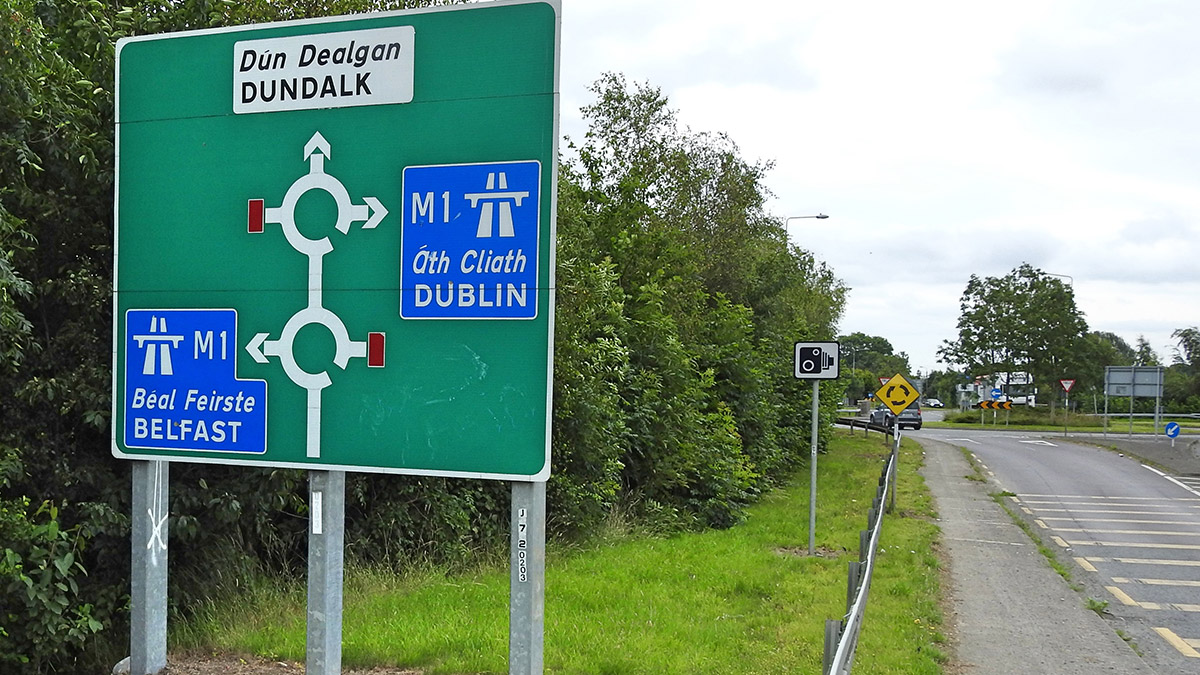
With the future of partition now back on the political agenda, it is important to ask what a new united Ireland might look like.4 Could it entail gardaí patrolling Belfast’s Shankill Road, the Irish tricolour flying over Stormont, and motorists in Antrim encountering Irish-language road signs? Could it require taxpayers in the Republic to pick up a very large bill to fund new constitutional arrangements, the union jack flying over the GPO, and an end to the mandatory teaching of Irish in schools?
This article argues that changes of this magnitude, and more, may be on the table in negotiating the contours of a united Ireland, but that these might also have less impact depending on the constitutional framework that is adopted. The article begins by outlining the broad parameters of the two most obvious constitutional models of unity – a fully unitary state and one with subordinate institutions in Northern Ireland – and then explores three of the several dimensions within which a new settlement would have to be located:
- structural: reorganisation of bureaucratic personnel and norms
- cultural: accommodation of conflicting identities and symbols
- material: redeployment of economic resources to match new political arrangements
These areas are by no means exhaustive, but they constitute a useful schema for analysing some of the major issues likely to arise in a post- partition Ireland.
Two models of territorial politics
To what extent does a framework for Irish unity imply turning the clock back to the 1920s, or have changes since then made it necessary to consider entirely new institutional models? An earlier article has argued that while several combinations of constitutional relationships are theoretically available, only two stand out as politically feasible: a substantially unitary all-Ireland state with power concentrated in the capital and one with special provisions for Northern Ireland’s autonomy similar to those it now enjoys within the UK.5
The first of these models may be described as the ‘traditional nationalist’ one: a centralised, unitary state, along the lines of the autonomous Irish state that was brought to an end by the Act of Union of 1800, or as implied by the concepts of ‘repeal’ advocated by Daniel O’Connell, of an ‘Irish republic’ proposed by the Fenians, or of ‘home rule’ favoured by the Irish Nationalist Party. Fatally compromised by partition in 1921, the unitary model nevertheless remained alive as a widely shared nationalist aspiration, articulated through the All-Party Anti-Partition Conference (1949–71) and the New Ireland Forum (1983–4). At least on the surface, this model has the virtue of simplicity: Northern Ireland’s political and administrative institutions would disappear, merged with their counterparts in the South, and the writ of the Republic’s institutions would extend over the whole island.
This model, however, might face formidable barriers. The imprint of a century of partition on administrative institutions, public culture, and economic relations is likely to be profound, and ignoring or seeking to bypass big differences between the two jurisdictions on the island is likely to result in disharmony if not conflict. For this reason, a second ‘modified devolutionist’ model is likely to overshadow the first: a unitary, all-island state with provision for autonomy for Northern Ireland. This approach attracted political attention during the home rule debates in 1912–14, was written into the Anglo-Irish Treaty of 1921, and was recognised both in the constitution
of the Irish Free State (1922, article 44) and the current constitution (1937, article 15.2.2º). It remained a favoured option of leading nationalists, such as Éamon de Valera, until the 1960s.6 This would operate by recognising Northern Ireland’s existing status as a self-ruling region but transferring the UK’s sovereign powers from Westminster to Dublin. This formula was built into the Good Friday Agreement, which provides for the transfer of Northern Ireland from the UK to the Republic subject to certain conditions.7
Constitutional structures, however, are little more than a skeleton that holds together a set of complex organs and institutions. The next three sections explore the shape that these might take within the three broad areas identified above: institutional structures (administrative, legal, security, and party systems), cultural arrangements (identity, symbolism, and public ritual), and more material issues (financial transfers, equalisation measures, and macroeconomic outcomes).
Structural challenges
The most visible and immediate challenge associated with any attempt to re- integrate Northern Ireland with the South is the profound impact of partition on the very extensive state organisational infrastructure. By the last quarter of 2023, there were dozens of public sector bodies on either side of the border (including government departments, health trusts, executive agencies and regulatory authorities). These bodies were staffed by 614,000 workers, excluding the military; 37% were in Northern Ireland. The civil service proper numbered 74,000, of whom 33% were in Northern Ireland.8 Since only 27% of the population was concentrated in the North, this suggests that, as well as other painful reforms, the public sector would be faced with acute problems of rationalisation, especially in Northern Ireland.
Changes would extend beyond personnel issues to organisational ones: North and South have diverged substantially since partition in such areas as public healthcare, education, social welfare, and local government. Any reunification scenario would require a decision on whether separate administrations for North and South would continue in each sector, whether these would be merged, or whether some kind of hybrid system of all-island and devolved sectors would be adopted.
Integration of the two legal systems illustrates the difficulties. The all- Ireland system for administration of the law that had evolved over the centuries came to an end after independence, when the Courts of Justice Act
(1924) overhauled and modernised the machinery for legal administration in the twenty-six counties. As Irish legislation deviated further from its English counterpart (from which it was already distinct), and Northern Ireland legislation pursued its independent route, with its own corpus of law, the two jurisdictions became increasingly differentiated. Northern Ireland legislators sought both to maintain alignment with England and Wales and to respond to special needs arising from civil unrest – both trends serving to differentiate it further from the South.9
Reorganisation of the security services would raise sensitive questions, given their role as sworn defenders of the existing order. Any new organisational model would depend on state structures – if Northern Ireland were to continue as an autonomous region, there would be a case for matching this with similar regional autonomy in the police service.10 Restructuring the military would be more difficult, given its ultimate role in defending the state. One post-unification scenario might follow the precedent of Irish independence in 1922, when regiments of the British army largely recruited in Ireland, such as the Royal Dublin Fusiliers and the Connaught Rangers, were simply disbanded. This would imply repatriating or disbanding the two remaining ‘Irish’ regiments in the British army, the Irish Guards and the Royal Irish Regiment. Theoretically, such elements of the UK’s military establishment could be incorporated in the Irish defence forces, while perhaps retaining their own identity. This would, however, sit uneasily with the distinctive traditions and ethos that distinguish the two military services: a formerly nationalist but now explicitly internationalist culture in the Irish case, a global post-imperial mission on the British side.
The complex relationship between Irish citizens and British armed forces
might be sufficiently elastic to bridge this gap. Rather than seeing the UK as just another country, the Irish state supports not only the Garden of Remembrance (to celebrate deceased Irish nationalists) but also the much larger, if less central, National War Memorial Gardens (to commemorate Irish soldiers killed in British uniform in 1914–18). The state also celebrates all Irish war dead in a ‘National Day of Commemoration’, and in 2012 it formally pardoned those who had deserted the Irish army during the Second World War (many of whom then enlisted in the British army).11 This unusual gesture highlights the flexibility with which the Irish state has been able to reach an accommodation with its once-demonised former ruler.
Party politics would also be transformed, as we may see by simulating post-
unity electoral outcomes. Let us assume a new, 180-member all-Ireland Dáil – a half-dozen larger than the current Dáil, just double the size of the current Northern Ireland Assembly, and exactly the same as the combined size of the two houses of commons envisaged in the foundational Government of Ireland Act, 1920. Allocation of seats in proportion to the results of mid-year population estimates for 2023 would give the North 49 seats with 131 going to the South – a modest shift southwards since the 1920 Act, which envisaged a Northern Ireland house of commons with 52 members and its Southern counterpart 128. The resulting Dáil would be profoundly fragmented. Projecting from the distribution of seats following the 2022 Assembly and 2024 Dáil elections and assuming a proportional allocation formula, Sinn Féin would be the largest party with 44 seats, followed by Fianna Fáil (36), Fine Gael (29), DUP (13), Alliance Party (9), Social Democrats (8), Labour (8), Ulster Unionists (5), and SDLP (4), with the remaining seats distributed between smaller parties and independents. A similar simulation for the pre-‘Troubles’ period, using the 1965 Dáil and Stormont elections, suggests a 180-member body dominated by Fianna Fáil (59 seats), Ulster Unionists (42) and Fine Gael (39) – more manageable material for coalition formation and a more reassuring expression of the unionist voice, but now of historical interest
only given demographic change and shifting party loyalties.
It seems, then, that in the event of Irish unity fundamental reshaping of the public service would be required, ranging from small- or large-scale mergers in some areas to outright abolition in others, with extensive staff redeployment and redundancy. This would extend from the domain of state administration to the world of party politics, and it would encounter sensitive problems of resources and identity.
Cultural discord
Big North–South cultural differences (arising from a quasi-colonial historical legacy, and reflected in contrasting processes of socio-economic development, nation-formation, and religious mobilisation) lay behind the partition of Ireland in 1921 and persisted subsequently, if in modified form.12 In a united Ireland, clashing cultures might be expected to have a fundamental impact on the unity of the state. The nationalist historical narrative would have to be adjusted, national symbols would need to be reconfigured, and a specific challenge would be posed in the area of language, to mention just three fields of potential friction.
The Irish nationalist historical myth, as it had evolved by the late nineteenth century, closely resembled that of other European ‘small nations’: it depicted national evolution as driven by an age-old struggle against political, cultural, and economic oppression by a powerful neighbour.13 This presented the ‘national struggle’ as a form of mobilisation against the British, elevating the Gaelic tradition and the Catholic faith, with the core ideology of independence and unity written into the preamble to the constitution. This clashed directly with the Irish unionist self-image, which highlighted the British heritage, extolling its ‘progressive’, imperial, Protestant character.
These two approaches posed contrasting challenges to historical conflict management. This was illustrated in the Republic’s Decade of Centenaries project, which over the period 2012–23 proposed dignified and effective ways to commemorate divisive events. Northern Ireland’s Commission on Flags, Identity, Culture and Tradition addressed an even more divisive agenda, including norms for the display of flags in public and private arenas.14
The new Irish state had no shortage of competing flags in 1922. The British royalist tradition implied one: the ‘cross of St Patrick’ (a red saltire on a white background), associated with the Knights of St Patrick, members of an exclusive order of chivalry established in 1783, some of whose banners still hang in Dublin Castle and St Patrick’s Cathedral. But the popularity of this flag never extended outside the conservative official world – not surprisingly, since at the time of the Act of Union the cross of St Patrick was incorporated in the existing British flag, merged with the cross of St Andrew of Scotland (a white saltire on a blue background) and St George of England (a red cross on a white background) to form the union jack, symbolising Ireland’s incorporation in the UK.
From the seventeenth to the twentieth century, the best-known Irish flag was the image of a harp superimposed on a green background, widely used by nationalist activists; a variant with blue background was preferred by the exotically (and misleadingly) designated ‘Ulster King of Arms’, the chief heraldic official in Dublin Castle.15 This is the version that was later adopted as the presidential standard.
The rebels of 1916 and their successors during the War of Independence adopted the tricolour, based on a French-influenced design dating back to 1848, symbolising the unity of ‘green’ and ‘orange’ traditions. This was eventually designated the national flag in the 1937 constitution, reflecting its wide popularity.16
Inevitably, since the tricolour celebrated an all-Irish identity separate from Britishness, it was rejected by Northern unionists, for whom the union jack held precedence. But the separate status of Northern Ireland was also reflected in the creation of a new flag for Northern Ireland, later known as the ‘Ulster banner’, based on arms granted to the Northern government in 1924 by the Ulster King of Arms – a rare post-partition intrusion of Dublin officialdom in Northern Ireland.17 This resembles the cross of St George, but with the addition of a red hand superimposed on a crowned, six-pointed star. Continuing disagreement about ‘official’ flags (and indeed paramilitary ones) suggests that this area would be particularly fraught in the event of Irish unity.
The selection of a national anthem for a united Ireland gives rise to similar problems. In the late nineteenth century, Timothy Sullivan’s ‘God Save Ireland’ supplanted its older rivals as the de facto national anthem of nationalist Ireland.18 But after the Easter rebellion it was sidelined by ‘The Soldier’s Song’, a rebel march composed in 1907, popularised after 1916, and quietly adopted as the national anthem in 1926.19 The new anthem was for long unloved: it was initially rejected by institutions linked to the former establishment, such as Trinity College and the Church of Ireland, who preferred ‘God Save the King’; its musical qualities were questioned; and its lyrics were attacked as inappropriately belligerent. Consequently, it was often replaced by Thomas Moore’s ‘Let Erin Remember’ on formal occasions abroad.20
The fact that the anthem is now almost always sung in Irish translation, as ‘Amhrán na bhFiann’, has helped to neutralise the militarism of its lyrics, since few understand Irish; but this also reduces the public’s capacity to participate. An experiment in 1924 to select an anthem by popular competition failed.21 New proposed anthems, such as ‘Ireland’s Call’ (commissioned in 1995 as an Irish national rugby anthem), compete with older ones, such as ‘Amhrán Dóchais’ (based on the old Irish melody ‘Mór Chluana’ and used as a salute to the taoiseach).22 Ironically, the absence of consensus even among nationalists on this question may assist in finding a broader accommodation; this is still a partly open space.
The policy of gaelicisation – including the mandatory teaching of Irish in schools and the de-anglicisation of public names and signage – was pushed forward by buoyant nationalism in the early twentieth century, though its effectiveness was limited. Language shift from Irish to English was not
halted, still less reversed, despite a century of effort. A major UNESCO publication classifies Irish as ‘definitely endangered’ – no longer learned as mother tongue by children in the home.23 This might suggest that changing sociolinguistic realities will resolve the underlying political problem. But even if Irish evaporates as the language of the home, it is unlikely to disappear as a political issue. Since its role is largely symbolic, it has the capacity to find expression in other contentious ways, as in public signage and placenames.
There are several routes towards management of cultural conflicts of the kind just described in the context of Irish unity. First, there is a monocultural path: the values of the dominant group (represented by those of perceived Gaelic Irish background) are embedded in the constitution, legal system, administrative structures, societal norms, and cultural symbols, and minorities are expected to conform. Second is a bicultural response: socio-cultural diversity is recognised, and both majority and minority are acknowledged in the public sphere; autonomous arrangements for the different communities are provided, and the cultural distinctiveness of each is recognised. Third, a neutral approach may be adopted: public structures are organised as far as possible in such a way as to remain culturally uncommitted, if necessary by promoting new values that cut across those of the existing communities. These approaches are likely to vary in their suitability from sector to sector and need not apply in the same way in all sectors. Securing widespread agreement in this area, though, while objectively unproblematic (the colour of a flag and the melody of an anthem are politically neutral), have a remarkable capacity to mobilise the most intense emotions. Tacking green and white segments onto an orange segment may politicise a particular piece of cloth, while devising emotional lyrics may weaponise an artistically harmless song.24
Economic relations
A study commissioned by the New Ireland Forum in the early 1980s concluded that in a united Ireland maintenance of living standards would depend on continuation of external financial supports – in effect, a warning shot about the financial implications of unity.25 Northern Ireland’s dependence on the British ‘subvention’ has indeed for long been presented as an intractable obstacle to Irish unity. But a second set of liabilities would arise: the costs of any attempted ‘equalisation’ of material conditions in the public sector in
both parts of the island. There is also a third consideration: the implications of unity for long-term macroeconomic trends.
The ‘subvention’ refers to the gap between UK expenditure on public services in Northern Ireland and revenue generated there. This deficit had risen to £13.9 billion by 2021.26 If responsibility for the subvention were simply transferred from the UK to the post-unification Irish state, the latter would inherit a potentially enormous burden.
But the extent of this burden has been disputed. John Doyle argued that the ‘subvention’ would be more modest in the context of Irish unity: the figure of £9.4 billion for 2017 would drop to £2.5 billion once certain substantial deductions were made (for UK state pension payments, servicing the national debt, maintaining the defence budget, and other costs).27 Similar analyses by Esmond Birnie and by John FitzGerald and Edgar Morgenroth concluded, however, that any reduction in the ‘subvention’ would be much more modest.28 Neither side is categorically ‘right’ or ‘wrong’: the answer will depend on the outcome of inter-governmental legal and political haggling over the terms of any proposed united Ireland, and the share of the burden to be allocated to the two sides. It should not be forgotten that the UK was prepared to offer very substantial financial and trade concessions to the Irish government in 1925 and in 1938 as part of broader settlements – precedents from which supporters of unity may draw solace.
Second, any newly-created all-Ireland state would come under irresistible pressure to reduce major structural inequalities between its two parts. In theory, equality can be attained by ‘levelling down’ the wealthier component; in political reality it is more likely to be attained by ‘levelling up’ the poorer component. A working group of senior civil servants assessing the implications of unity for the Republic in 1973 noted that there were big gaps in service provision south of the border in such areas as housing, social welfare, health, and education and warned that the creation of all-Ireland institutions was likely to draw attention to this, putting pressure on the Irish government to raise these to Northern Ireland standards.
The two methods that the group used to estimate the costs of this exercise suggested the need for enormous additional expenditure in the Republic, ranging between £260 million and £280 million – a sum that at the time implied a massive increase of 41–44% in public expenditure.29 A half-century later, it appears that it is Northern Ireland that would need extra supports. The cost of cross-border reorganisation would now depend on the model of unity
that is followed and the level of ambition in paying the costs of bringing the Northern and Southern public services into alignment.
Third, macroeconomic trends matter. Debates on home rule a century ago reflected a unionist perception that Southern Ireland was simply too economically backward to lead a prosperous all-Ireland state. The Southern economy at the time was indeed ‘poor and overwhelmingly agricultural’, while that of Northern Ireland was ‘heavily industrialised and relatively prosperous’.30 But the fortunes of the two economies have been reversed. The Republic’s agrarian economy has been replaced by one dominated by high- technology industries and services, while Northern Ireland’s traditional heavy industries have suffered the same recessionary setbacks as their counterparts elsewhere in Europe. Northern Ireland’s dependence on the ‘subvention’ also leaves it exposed to economic shocks such as Brexit, given the risk of a shift in British focus from Northern Ireland to the English regions.31 Nevertheless, an exercise in modelling the Northern Ireland economy within the context of that of the whole island suggests that it would perform well in current post- Brexit arrangements: annual growth would average approximately 1.2%, though with plenty of room for productivity levels to improve.32 A favourable political environment would be likely to assist this further, especially through investment in the private sector.33
Contemporary supporters of Irish unity appear to have a relatively
extensive stock of ‘good news’ stories in respect of material conditions, with relatively high disposable income, greater access to education, and longer life expectancy in the Republic.34 Basic welfare supports (state pension, unemployment benefit, disability support, and maternity pay) are also much higher in the South, though account needs to be taken of higher living costs there.35 Overall, rapid growth in the Irish economy has been hailed as an important factor in assisting the case for Irish unity. One study commissioned by a US-based nationalist group sought to project economic growth under three scenarios, resting on the assumption of significant savings from harmonisation of government functions; even the least favourable scenario predicted a short-lived boost to growth.36
It is, then, unrealistic to attempt to assess accurately the economic consequences of Irish unity. These will depend on the outcome of Irish– UK negotiations in respect of the ‘subvention’, in which there might also be EU and US involvement. A further set of costs would be incurred in implementing ‘equalisation’ measures between the two jurisdictions on
the island. Macroeconomic developments also defy reliable prediction, notwithstanding their role in defining the parameters of geopolitical change.
Conclusion
This article has focused on three dimensions that will have an impact on the shape of any united Ireland, and that in turn will probably be framed by whatever constitutional arrangements are agreed (in particular, whether the ‘traditional nationalist’ model of a centralised unitary state or the ‘modified devolutionist’ model of a state with autonomy for Northern Ireland is adopted).
Under any model, reform of the public administration system is unavoidable: there must either be an integrated all-island public service, or separate services for the two parts of the island (with an overarching structure), or some type of asymmetrical, à la carte arrangement. One way or the other, bringing this about will be a major challenge, as bureaucratic structures, job roles, work practices, and pay and conditions are harmonised – a process likely to encounter entrenched resistance by incumbent public servants in certain sectors, not just in Northern Ireland but also in the South. Unravelling sensitive strands in national cultural frameworks, state rituals, and community symbols will be particularly difficult: there is no workable sliding scale within these ‘zero-sum’ areas but many possibilities for horse- trading between them and opportunities to devise alternatives. Embedded loyalties to particular public symbols, such as Irish survey respondents’ loyalty to the tricolour, are likely to cut across proposed compromise
formulas.37
Economic costs may also present formidable difficulties. The pain arising from efforts to resolve the UK ‘subvention’ to Northern Ireland might be enormous, depending on the kind of deal ultimately reached. The bill for reforming and upgrading public services would also be daunting. Future economic performance of the island of Ireland could make these costs easier to bear – or much more difficult, depending on unpredictable patterns of macroeconomic evolution.
These are only some of the questions that would arise in the event of Irish unity. Other considerations arise from the issue of Irish membership of the Commonwealth and the evolution of the EU and NATO (of whose territory Northern Ireland is part). Acute challenges of cultural transmission and symbolism would arise, with new social media offering additional pathways
towards identity shift; and the future of traditional media, such as the BBC, in the context of Irish unity is unclear. Among many other unpredictable outcomes, the impact of the Trump presidency on the EU–UK–Irish relationship stands out.
The genie that escaped from the bottle after partition in 1921 has enjoyed decades of freedom, spawning further areas where North and South went their separate ways. In some sectors, such as trade, employment law, and external affairs, the drive to divide was propelled by the South; in others, such as creation of parallel political structures and adhesion to British social policy reforms, it was driven by Northern Ireland. The near irreversibility of some of these changes impedes the task of getting the genie back into the bottle, but there is also a risk of further separation, however unintentional, in such fields as the common travel area.
Notwithstanding its emphasis on challenges rather than opportunities, this article is not designed to scupper the case for unity but to argue the need for a scoping enquiry into what is entailed. The prospects for Irish unity are real, though this is not likely to come about just through demographic change or public opinion shift. One of the starkest features of contemporary geopolitics – rarely acknowledged in respect of Northern Ireland – is that the UK government, as an actor that, like other governments, seeks to advance its own interests, may well eventually choose to divest itself of its troublesome Irish region.38 In shaping the future of the union, the priorities of policy makers in Westminster and Whitehall are likely to continue to outweigh the preferences of voters in Dublin and Belfast. Unfortunately, though, the difficult task of devising a new constitutional order represents the start rather than the end of this ambitious geopolitical experiment.
John Coakley is Emeritus Professor of Politics at University College Dublin and Fellow of the Geary Institute for Public Policy. He is a member of the Royal Irish Academy.
Acknowledgement: The author is indebted to Michael D’Arcy, Dan Egan, Yvonne Galligan, Paul Gillespie and Michael Sanfey for comments on an earlier draft.
Notes
- K. J. Rankin, ‘The Role of the Irish Boundary Commission in the Entrenchment of the Irish Border: from Tactical Panacea to Political Liability’, Journal of Historical Geography, 34:3 (2008), pp. 422–447 (p. 423).
- See Paul Gillespie, Michael Keating and Nicola McEwen, eds, Political Change across Britain and Ireland: Identities, Institutions and Futures (Edinburgh University Press, 2025).
- John Coakley, ‘Adjusting to Partition: from Irredentism to “Consent” in Twentieth-Century Ireland’, Irish Studies Review, 25:2 (2017), pp. 193–214.
- For three useful overviews of the debate based on extensive interviews with prominent commentators and analysts, see Malachi O’Doherty, Can Ireland Be One? (Newbridge: Merrion Press, 2022); Frank Connolly, United Nation: The Case for Integrating Ireland (Dublin: Gill Books, 2022); Padraig O’Malley, Perils and Prospects of a United Ireland (Dublin: Lilliput, 2023).
- John Coakley, ‘A Farewell to Northern Ireland? Constitutional Options for Irish Unity’,Political Quarterly, 93:2 (2022), pp. 307–315.
- For example, de Valera repeated this suggestion during his presidential address to commemorate the fiftieth anniversary of the 1916 rising; The Irish Times, 18 April 1966.
- Richard Humphreys, Beyond the Border: The Good Friday Agreement and Irish Unity after Brexit (Newbridge: Merrion Press, 2018), pp. 106–19.
- Derived from the Department of Public Expenditure databank, https://databank.per.gov.ie/, and the Northern Ireland Statistics and Research Agency’s quarterly employment survey historical tables, www.nisra.gov.uk/publications/quarterly-employment-survey-historical-tables- september-2024. Because of non-matching definitions North–South comparisons need to be treated with care.
- W. N. Osborough, ‘Irish Law’, in The Oxford International Encyclopedia of Legal History, ed by Stanley N. Katz (Oxford University Press, 2009), vol. 3, pp. 306–14; Brice Dickson,‘Northern Ireland Law’, in Peter Cane and Joanne Conaghan, eds, The New Oxford Companion to Law (Oxford University Press, 2008).
- See Brendan O’Leary, Making Sense of a United Ireland: Should It Happen? How Might It Happen? (Dublin: Sandycove, 2022), pp. 250–57.
- See Michael Kennedy, ‘Time to Ask Questions about Irish Deserters during World War II’, The Journal, www.thejournal.ie/readme/irish-army-deserters-world-war-ii-shatter-pardon-485472- Jun2012/; Cían Harte, ‘Should the Deserters Be Remembered, Commemorated or Celebrated? Or Ignored and Forgotten?’, An Cosantóir, 84:5 (2024), pp. 28–29.
- Jennifer Todd, ‘Unionism, Identity and Irish Unity: Paradigms, Problems and Paradoxes’, Irish Studies in International Affairs, 32:2 (2021), pp. 53–77 (pp. 60–64).
- John Coakley, Nationalism, Ethnicity and the State: Making and Breaking Nations (London: Sage, 2012), pp. 94–115.
- See www.gov.ie/en/publication/a5ead-decade-of-centenaries/, and Commission on Flags, Identity, Culture and Tradition, Final Report (Belfast: Executive Office, 2021).
- Susan Hood, Royal Roots–Republican Inheritance: The Survival of the Office of Arms (Dublin: Woodfield Press, 2002), p. 121.
- Department of the Taoiseach, The National Flag: An Bhratach Náisiúnta (Dublin: Department of the Taoiseach, 2018), pp. 3–5.
- Hood, Royal Roots, p. 120.
- Peter Alter, ‘Symbols of Irish Nationalism’, Studia Hibernica (1974), pp. 104–123 (p. 109).
- Ruth Sherry, ‘The Story of the National Anthem’, History Ireland, 4:1 (1996), pp. 39–43.
- Ewan Morris, ‘“God Save the King” versus “The Soldier’s Song”: the 1929 Trinity College National Anthem Dispute and the Politics of the Irish Free State’, Irish Historical Studies, 31:121 (1998), pp. 72–90. Ironically, the Irish Guards still use ‘Let Erin Remember’ as their regimental slow march.
- The competition was sponsored by the Dublin Evening Mail, but the judges concluded that none of the entries was worth even a portion of the 50-guinea prize money; the anthem preferred by Mail readers was an unattractive and cliché ridden piece that ‘went on to find the obscurity it so richly deserved’; ‘The Soldier’s Song’ was adopted by default; Morris, ‘God Save the King’, pp. 74–6.
- Michael Bowles with Ríonach uí Ógáin, ‘Amhrán Dóchais’, The Irish Times, 23 December1983. Amhrán dóchais means ‘song of hope’, and Mór Chluain refers to ‘Mór [a personal name] of Cloyne’.
- Chrisopher Moseley, ed., Atlas of the World’s Languages in Danger, 3rd ed. (Paris: UNESCO Publishing, 2010), pp. 12, 38.
- It is worth noting that the melody (but not words!) of ‘God Save the King’ serves as national anthem in several countries within and outside the Commonwealth, while (as ‘My Country, ‘tis of Thee’) having special status in the USA.
- New Ireland Forum, The Macroeconomic Consequences of Integrated Economic Policy, Planning and Co-ordination in Ireland (Dublin: Stationery Office, 1984), p. 22.
- John FitzGerald and Edgar Morgenroth, Northern Ireland Subvention: Possible Unification Effects (Dublin: Institute of International and European Affairs, 2024).
- John Doyle, ‘Why the “Subvention” Does Not Matter: Northern Ireland and the All-Ireland Economy’, Irish Studies in International Affairs, 32:2 (2021), pp. 314–34.
- Esmond Birnie, ‘The Subvention Matters: a Response to “Why the ‘Subvention’ Does Not Matter: Northern Ireland and the All-Ireland Economy” by John Doyle’, Irish Studies in International Affairs, 34:2 (2023), pp. 359–94; FitzGerald and Morgenroth, Northern Ireland Subvention.
- John Coakley, ‘Sunningdale and the Irish Dimension’, in Sunningdale, the Ulster Workers’ Council Strike and the Struggle for Democracy in Northern Ireland, ed by Cillian McGrattan and David McCann (Manchester University Press, 2017), pp. 55–71 (p. 61).
- John Bradley, ‘The Island Economy: Ireland before and after the Belfast Agreement’, in John Coakley and Liam O’Dowd, eds, Crossing the Border: New Relationships between Northern Ireland and the Republic of Ireland (Dublin: Irish Academic Press, 2007), pp. 61–86 (p. 63).
- John FitzGerald and Edgar L. W. Morgenroth, ‘The Northern Ireland Economy: Problems and Prospects’, Journal of the Statistical and Social Inquiry Society of Ireland, 49 (2019–20), pp. 64–87.
- Adele Bergin, Hailey Low, Stephen Millard and Akhilesh Kumar Verma, Modelling Northern Ireland within the Context of the All-Island Economy, research series 198 (Dublin: ESRI, 2025).
- Michael D’Arcy, Briefing Note on Re-Setting Ireland/UK Relations to Enhance Prosperity and Embed Peace (Armagh: Centre for Cross-Border Studies, 2024).
- Adele Bergin and Seamus McGuinness, ‘Who Is Better Off? Measuring Cross-Border Differences in Living Standards, Opportunities and Quality of Life on the Island of Ireland’, Irish Studies in International Affairs, 32:2 (2021), pp. 143–160.
- Paul Gosling, ‘Who Is Better Off: the Irish, the Northern Irish or the British? A Regional Economic Comparison’, Irish Studies in International Affairs, 34:2 (2023), pp. 186–221.
- KLC Consulting, Modelling Irish Unification (Oakland: Knights of the Red Branch Inc, 2015); report authored mainly by Kurt Hübner.
- In a survey in August–October 2023, three quarters of respondents in the Republic described their feeling towards the Irish national flag as ‘very positive’; The Irish Times/ARINS All Ireland research, 3 November 2023, www.ria.ie/research-programmes/arins/
- Harold Wilson had contingency plans for a British withdrawal drawn up in 1974–75; John Coakley and Jennifer Todd, Negotiating a Settlement in Northern Ireland, 1969–2019 (Oxford University Press, 2020), pp. 93–95. The government of James Callaghan (1976–79)
commissioned a similar study following the demise of the Constitutional Convention of 1975– 6; David O’Dornan, ‘Labour Government Explored “Doomsday” Scenario’, Sunday Life, 14 August 2022.